
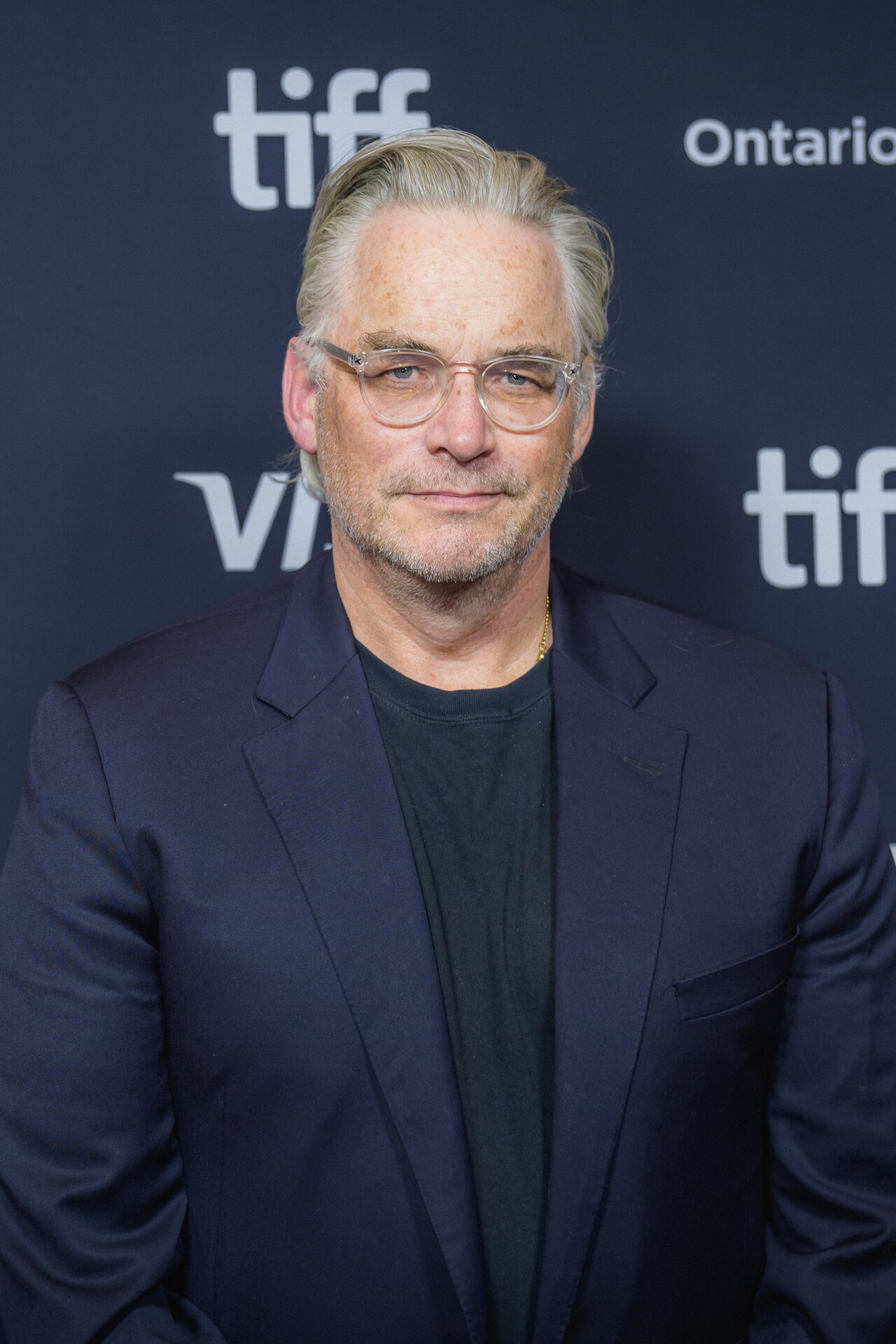
The ramp ran 1,400 feet up. The landing zone sat on the far side of a mile of the St. Lawrence River. In a video TIFF posted from Friday’s world premiere of The Stunt Driver, director Michael Dowse, Joe Cobden and Dan Bakkedahl sit down to explain what drew them to that absurd, very Canadian gamble — a conversation the festival teased with a single line: “I can’t wait to tell this story…”
The film had its world premiere at TIFF on Sept. 11 in the Special Presentations slate, re-teaming Dowse with Jay Baruchel 15 years after Goon. Baruchel plays Ken Carter, the Montreal daredevil who spent the 1970s trying to launch a rocket-powered Lincoln Continental across the river. It opens in Canadian Cineplex and Landmark theatres and in the U.S. via Independent Film Company on Sept. 25.
Bakkedahl, best known as Jonah Ryan on HBO’s Veep, plays Carter’s manager, Bill Wilkins. Cobden — a Montreal stage fixture Baruchel has known since he was 18 — plays NFB documentarian Robert Fortier, whose own troubled shoot becomes a running subplot. Ed Helms is rocket engineer Dick Keller, Laurence Leboeuf is Carter’s partner Gloria, and Ben Foster plays Evel Knievel.
Fourteen, a stunt circus, and one very yellow Lincoln
Carter was born Kenneth Gordon Polsjek in Montreal in 1938, quit school at 14 and joined Joie Chitwood’s travelling stunt show, which hauled him around the world before he went solo as “The Mad Canadian.” By the mid-’70s he was chasing the kind of spectacle Knievel had made mainstream — the American’s rocket-powered Snake River Canyon jump failed in September 1974, and Carter figured he could clear something bigger.
The movie builds on Robert Fortier’s 1981 NFB documentary The Devil at Your Heels, which chronicled the ramp construction at Morrisburg, Ontario, the landing zone on Ogden Island, New York, and the mile-long gap between them. Dowse has called the project his “white whale,” first optioned off a friend’s recommendation roughly 12 years ago.
He shot it in Quebec last year while Canada and the United States were trading tariffs. That tension leaked into the movie, Dowse told the Canadian Press: the conflict “added a bit of fuel,” and some improvised lines between Baruchel’s Carter and his Knievel scenes came straight out of it. It’s a rare case of a 1970s underdog story arriving with a current-events charge attached.
Carter never got his ending. He died in 1983, in his mid-forties, attempting yet another jump — a few years after the cameras stopped rolling. What survives is his own summary of the obsession, delivered to the NFB crew: “I’m looking for the ultimate statement. Really, that is what it’s about.”